Wayfinding signs in San Diego should do more than point people in the right direction. A strong system helps drivers, visitors, tenants, vendors, and first responders move through a property safely and quickly while supporting ADA signage needs, visibility, brand consistency, and local sign requirements.
Wayfinding signs work best as a complete visitor-flow system
Wayfinding signs are the signs people use to understand where they are, where they need to go, and what to do next. For San Diego commercial properties, that can include entrance signs, directional signs, parking signs, building directories, suite identification, ADA signage, restroom signs, floor graphics, wall signs, and exterior post-and-panel signs.
The most common mistake is treating wayfinding as one sign instead of a system.
A monument sign or entrance panel may tell visitors they have arrived, but it does not solve the next decision: where to park, which driveway to use, which building entrance to approach, where deliveries go, or how to find a tenant suite. For office parks, medical campuses, schools, shopping centers, apartment communities, industrial properties, and municipal facilities, the real value comes from placing the right sign at each decision point.
All Star Signs has served Escondido and Metro San Diego County since 1998, helping local businesses and property managers plan signs that are practical, durable, and easy to read. If your property needs exterior directionals, interior identification, or code-related signs, start with All Star Signs’ full range of all sign to see how a coordinated sign package can support the whole site.
Clear visibility is more important than clever wording
Wayfinding signs should be simple, legible, and visible from the distance where the visitor must make a decision. That sounds obvious, but many properties lose clarity because signs are too small, crowded with text, hidden by landscaping, blocked by parked cars, or placed after the driver has already missed the turn.
A practical wayfinding sign should answer one question at a time:
- Where am I?
- Which direction should I go?
- Where should I park or enter?
- What space, suite, or department is this?
- Is this route accessible, restricted, or for service use only?
Operator insight from All Star Signs: wayfinding signs should be easy to read and clearly visible, while being appropriately sized so multiple signs can be used throughout the property where permitted. One sign at the entrance may provide initial direction, but additional signs at key locations help drivers navigate the property and find their destination.
That principle is especially important in San Diego County, where commercial properties often combine vehicle traffic, pedestrian access, tenant suites, service entries, accessible routes, and limited parking into one site.
The strongest wayfinding plans start with a property walkthrough
Before designing signs, walk the property as if you have never been there before. The goal is to identify where people hesitate, turn around, park incorrectly, enter the wrong door, or call the front desk for directions.
Use this field checklist before ordering wayfinding signs:
- Main vehicle entrances from the street
- Visitor parking and employee parking
- Accessible parking and accessible routes
- Building entrances and secondary entrances
- Tenant directories or suite maps
- Delivery, loading, and service areas
- Restrooms, elevators, stairs, exits, and reception areas
- Areas where drivers must decide before they can safely stop
- Locations where lighting, landscaping, glare, or traffic speed affect readability
- Existing signs that are outdated, inconsistent, damaged, or non-compliant
For a multi-tenant property in Escondido, San Marcos, Vista, Carlsbad, Oceanside, Poway, or greater San Diego, this walkthrough often reveals that the issue is not the absence of signage; it is inconsistent signage. Different fonts, colors, materials, arrows, and mounting styles can make a property feel confusing even when signs are present.
Design choices should support fast decisions, not decoration alone
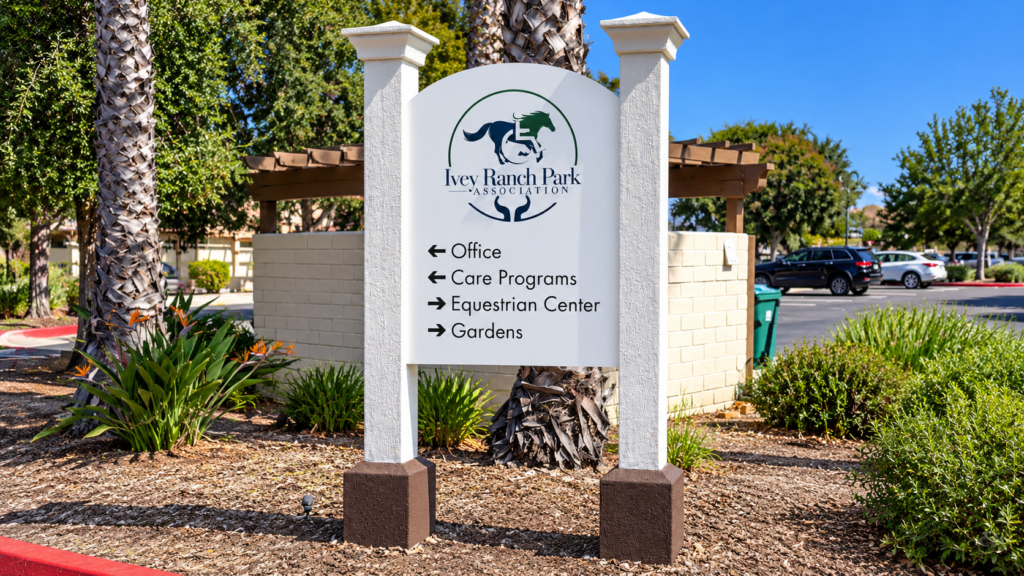
Good wayfinding design balances branding with speed. Visitors usually interact with these signs while walking, driving, carrying items, looking for parking, or trying not to miss a turn. The sign must work quickly.
Effective design choices include:
- High-contrast colors between text and background
- Large, clean typography
- Short labels such as “Visitor Parking,” “Leasing Office,” or “Suite 200”
- Consistent arrows and directional symbols
- Durable materials suited to sun, moisture, wind, and daily wear
- Brand colors used carefully without reducing readability
- Reflective or illuminated options where visibility is needed after dark
All Star Signs can produce custom wayfinding signs with professional fabrication, quality materials, and HP Latex printing options for projects that need crisp graphics with a greener print profile. That matters for property managers, schools, healthcare offices, and commercial owners who want signs that look professional without sacrificing practical performance.
ADA signage and wayfinding should be planned together
Wayfinding and ADA signage often overlap, but they are not the same thing. A directional sign may guide visitors to a restroom, while ADA signage may be required at the restroom itself. A directory may help people locate a suite, while room identification signs may need tactile characters, Braille, mounting standards, and compliant contrast.
Common ADA-related sign locations include:
- Restrooms
- Permanent rooms and spaces
- Accessible entrances
- Exits and evacuation routes
- Elevators and stairwells
- Parking and accessible routes
- Public-facing facility areas
Because California properties can face detailed accessibility requirements, ADA signs should not be treated as an afterthought. If your project includes permanent room labels, restroom signs, accessible parking, or public interior spaces, review All Star Signs’ ADA signage capabilities early in the planning process.
Local installation experience helps prevent expensive rework
Wayfinding signs must be designed for the real installation environment. Wall type, post depth, concrete, landscape irrigation, lighting, sightlines, tenant standards, landlord rules, and property access can all affect the final result.
A local San Diego sign company brings value by helping property owners avoid problems such as:
- Signs installed too low or too high for visibility
- Directional signs placed after the decision point
- Materials that fade, warp, or fail outdoors
- Inconsistent signs added over time by different vendors
- ADA signs installed in the wrong location
- Sign packages that look good on a proof but fail on-site
All Star Signs is based in Escondido and serves commercial clients across San Diego County with design-through-installation support. For businesses comparing a national franchise, online sign seller, or local fabricator, the difference is often field judgment: knowing how a sign will function once it is mounted, exposed to weather, and used by real visitors.
A practical wayfinding package improves the entire property experience
Wayfinding signs are not just a convenience. They reduce frustration, support safety, improve tenant satisfaction, and make a property feel professionally managed. For high-traffic sites, the right signs can also reduce unnecessary phone calls, missed appointments, parking confusion, delivery delays, and visitor complaints.
A well-planned San Diego wayfinding sign package may include:
- Entrance identification to confirm arrival.
- Directional signs to guide drivers and pedestrians.
- Parking signs for visitors, employees, accessible spaces, loading, and restricted areas.
- Directories for multi-tenant buildings or campuses.
- Interior wall signs for departments, suites, restrooms, exits, and reception.
- ADA signage for required permanent spaces and accessible routes.
- Branded graphics that make the property feel cohesive.
If your current signs have been added one at a time over the years, a sign audit can identify what should stay, what should be replaced, and where new signs would improve flow.
All Star Signs builds wayfinding signs for San Diego commercial properties
All Star Signs helps San Diego property owners, managers, schools, municipalities, contractors, and businesses create custom sign systems that are readable, durable, and built for the site. From exterior directionals and directories to interior ADA signs and branded graphics, the team can help you plan a package that fits your property and your budget.
If you are updating a commercial property, opening a new location, or trying to make a confusing site easier to navigate, contact All Star Signs for a local wayfinding sign review. You can also explore their sign company Escondido service page if you need a nearby team serving Escondido, North County, and Metro San Diego.
Frequently asked questions about wayfinding signs in San Diego
What are wayfinding signs used for?
Wayfinding signs help visitors, drivers, tenants, employees, vendors, and pedestrians move through a property. They identify entrances, parking areas, buildings, suites, restrooms, exits, accessible routes, loading zones, and key destinations.
How many wayfinding signs does a commercial property need?
The number depends on the property layout, number of entrances, traffic flow, tenant count, parking areas, and accessibility needs. A single entrance sign may help with arrival, but most properties need additional signs at key decision points.
Do wayfinding signs need to be ADA compliant?
Some wayfinding signs may not require tactile or Braille elements, but many permanent room signs, restroom signs, accessible route signs, and public facility signs may need to meet ADA requirements. ADA signage should be reviewed during the planning stage, not after installation.
What materials are best for outdoor wayfinding signs in San Diego?
Common outdoor options include aluminum, acrylic, PVC, post-and-panel systems, monument-mounted panels, dimensional lettering, and printed graphics with protective finishes. The best material depends on exposure, mounting location, desired lifespan, brand appearance, and budget.
Can All Star Signs match wayfinding signs to an existing property brand?
Yes. Wayfinding signs can be designed to match existing colors, fonts, logos, tenant standards, and architectural style while still keeping readability and visibility as the priority.
Request a consultation
Contact Us