Sign installation in San Diego usually requires confirming site conditions, landlord approval, city permit requirements, electrical access, wall structure, and installation timing before fabrication is complete. Most projects move fastest when the sign type, location, mounting method, and local code expectations are reviewed early—not after the sign is ready to install.
A successful San Diego sign installation starts before the sign is fabricated
The biggest mistake businesses make with sign installation is treating it as the final step. In reality, installation planning should begin during design.
A storefront sign, school marquee, wall sign, cabinet sign, ADA signage package, or set of property management signs may look simple on paper. But installation depends on what the wall is made of, whether electrical service exists, whether the property owner approves the location, whether the city requires a permit, and whether the sign fits the character of the surrounding area.
All Star Signs has served San Diego County from Escondido since 1997/1998, working with businesses, schools, municipalities, property managers, contractors, and organizations that need signs installed correctly the first time. That local field experience matters because “San Diego” is not one permitting environment. Escondido, Oceanside, Carlsbad, San Marcos, Vista, Poway, El Cajon, Chula Vista, Encinitas, and the City of San Diego can each have different review expectations.
If you are comparing sign companies, do not only ask, “How much is the sign?” Ask, “Who is checking the installation conditions, permit path, and local compliance before production begins?”
Need help planning an upcoming sign project? Start with All Star Signs’ full-service all signs capabilities to match the right sign type, materials, fabrication method, and installation approach for your location.
Permit requirements depend on the sign type and the city reviewing it
Not every sign installation in San Diego requires the same level of review. Interior signs and simple non-illuminated panels may be straightforward. Exterior signs, illuminated signs, building-mounted signs, monument signs, freestanding signs, and signs near public right-of-way often require more documentation.
Common permit considerations include:
- Sign dimensions and square footage
- Mounting height and placement
- Illumination method
- Electrical requirements
- Property zoning
- Landlord or property manager approval
- Structural attachment method
- Visibility from streets, sidewalks, or neighboring properties
A sign that is attractive but poorly matched to the property can create avoidable scrutiny.
Operator Insight from the All Star Signs Team:
Before deciding on a sign installation in San Diego, make sure the sign complements the surrounding area and is consistent with nearby signage. A sign that appears out of place or does not conform to the character of the area may draw unwanted attention from local city inspectors and create additional compliance issues.
That advice is practical. A sign does not exist in isolation. A new storefront sign in a shopping center, a school sign in Oceanside or Carlsbad, or a business sign in Escondido must fit the visual, code, and property context around it.
Timelines vary by sign type, permitting, materials, and site access
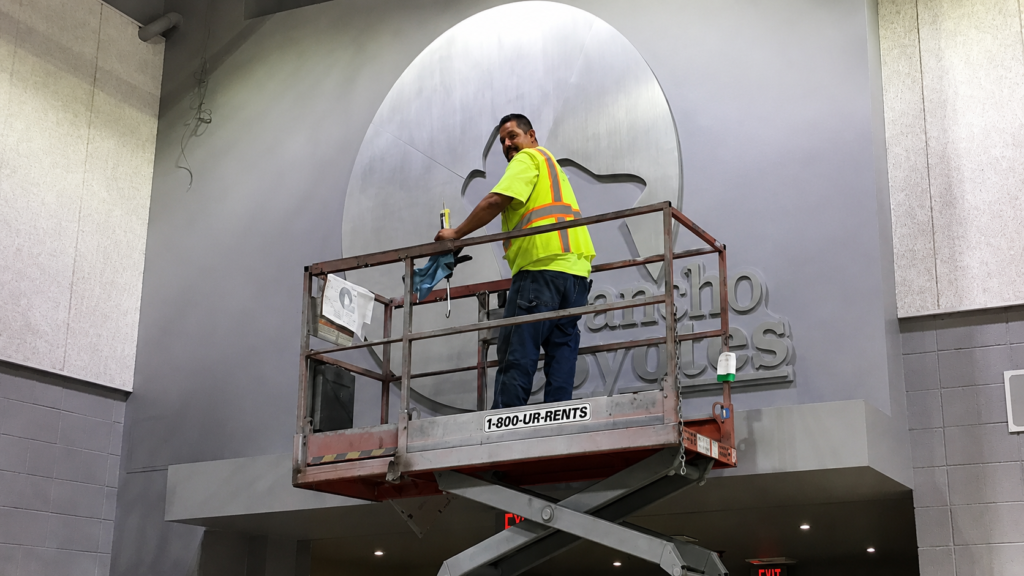
A realistic sign installation timeline depends on more than production speed. A project can be delayed by permit review, landlord approval, electrical work, lift access, weather, wall conditions, or missing field measurements.
Typical planning ranges may look like this:
| Sign Type | Typical Cost Range | Typical Timeline | Permit Requirement |
| Interior lobby signs | $500–$3,500+ | 1–3 weeks | Usually not required unless electrical or structural issues apply |
| ADA signage packages | $750–$5,000+ | 1–4 weeks | Often code-driven; permit needs vary by project scope |
| Exterior wall signs | $2,500–$12,000+ | 3–8 weeks | Often required, especially for larger or illuminated signs |
| Illuminated cabinet or channel-style signs | $4,500–$20,000+ | 4–10 weeks | Commonly required; electrical review may apply |
| Monument or freestanding signs | $7,500–$35,000+ | 6–12+ weeks | Usually required; may involve structural and site review |
| Vehicle graphics or fleet graphics | $750–$6,000+ per vehicle | 1–3 weeks | Usually not required for vehicle application |
These ranges are general. Final pricing depends on size, materials, access, fabrication complexity, illumination, engineering, removal of old signage, and installation conditions.
For example, a set of ADA signage for an office, school, or municipal facility may be less complicated to install than a large illuminated building sign, but it still needs to meet code requirements for placement, readability, tactile lettering, Braille, contrast, and mounting height.
Installation readiness prevents expensive day-of delays
A sign can be beautifully fabricated and still fail installation readiness. Before installation day, your sign company should confirm the practical field conditions.
Important readiness checks include:
- Accurate field measurements: Wall dimensions, mounting surface, visibility, and obstructions should be verified.
- Wall and structure review: Stucco, concrete, metal fascia, wood framing, and masonry require different fastening methods.
- Electrical availability: Illuminated signs need proper electrical access and coordination.
- Access planning: Bucket trucks, lifts, ladders, parking control, or after-hours access may be required.
- Old sign removal: Existing signs, patching, paint matching, and wall repair should be considered.
- Property approvals: Shopping centers, schools, HOAs, property managers, and landlords may need to approve design and placement.
- Weather and safety: Wind, rain, traffic, pedestrian access, and worksite safety can affect scheduling.
For schools, property managers, and multi-site organizations, this coordination is especially important. All Star Signs already has strength in institutional signage, including school signs, property management signs, marquees, ADA packages, and third-party installation support.
Businesses planning marquees for schools, campus wayfinding, or exterior identification signs should build in extra time for stakeholder approval and site coordination.
Local expertise matters more than generic sign ordering
Online sign sellers and national franchises can be useful for simple printed products, but San Diego sign installation requires local judgment. A sign that ships in a box is not the same as a sign that is properly surveyed, fabricated, permitted, mounted, and finished.
A local sign installation partner should help answer:
- Will this design fit the property and neighborhood?
- Does the city require a permit?
- Is the wall suitable for this sign type?
- Will illumination require electrical coordination?
- Can installation be completed during business hours?
- Will the sign be visible from traffic and pedestrian paths?
- Does the finished sign match the quality of the business?
All Star Signs combines custom craftsmanship, broad service capability, quality materials, and local installation experience across Metro San Diego County. That is especially valuable for companies that need more than a one-off sign—such as schools, contractors, property managers, retailers, municipalities, and organizations coordinating multiple signs across a site.
The best sign installation process follows a clear sequence
A smooth project usually follows this order:
- Site review and goals discussion
Identify sign purpose, location, audience, visibility needs, and property constraints.
- Design and material recommendation
Match the sign type, finish, durability, illumination, and scale to the business and environment.
- Permit and approval review
Confirm city, landlord, property manager, and code requirements before fabrication advances too far.
- Fabrication and production
Build the sign using appropriate materials, print methods, finishes, and mounting systems.
- Installation scheduling
Coordinate access, equipment, safety needs, electrical work, removal, and timing.
- Final installation and inspection readiness
Install securely, clean the site, test illumination if applicable, and confirm the finished presentation.
This process protects the client from rework, compliance issues, rushed decisions, and avoidable delays.
FAQ
How long does sign installation take in San Diego?
Simple interior signs may be installed within one to three weeks after approval, while exterior or illuminated signs often take four to ten weeks depending on permits, materials, fabrication, and scheduling. Monument signs or complex projects can take longer because they may require structural review, site preparation, or multiple approvals.
Do I need a permit for sign installation in San Diego?
Many exterior signs require permits, especially illuminated, building-mounted, monument, pole, or large wall signs. Permit rules vary by city and property type. Interior signs and some non-illuminated signs may not require the same review, but it is best to confirm before fabrication.
What can delay a sign installation?
Common delays include missing landlord approval, permit review, inaccurate measurements, unavailable electrical access, wall damage, lift access restrictions, weather, tenant improvement conflicts, and changes to sign size or placement after production has started.
Can All Star Signs install signs outside Escondido?
Yes. All Star Signs is based in Escondido and serves businesses across Metro San Diego County, including North County and surrounding cities. The team supports local businesses, schools, property managers, contractors, and organizations needing professional sign fabrication and installation.
What should I prepare before requesting a sign installation quote?
Prepare your business address, photos of the installation area, approximate sign dimensions, landlord or property manager requirements, preferred timeline, and any city or tenant signage criteria you already have. If replacing an old sign, include photos of the existing sign and wall condition.
Contact Us