General contractors should plan construction site signage before mobilization so safety rules, site access, contractor identification, emergency contacts, traffic flow, and public-facing project information are clear from day one. In San Diego, early planning helps avoid delays, rushed fabrication, poor visibility, and signage that fails to guide workers, visitors, inspectors, or the public.
Early signage planning prevents confusion, delays, and avoidable site risk
Construction site signage is not just branding on a fence. For a general contractor, it is part safety tool, part communication system, part public-facing project marker, and part access-control aid.
A well-planned construction signage package in San Diego should answer five practical questions immediately:
- What is being built or improved?
- Who is the contractor or project team?
- Where should workers, vendors, inspectors, and visitors enter?
- What safety requirements apply before entering the site?
- Who should be contacted in an emergency or after-hours situation?
If these answers are missing, unclear, or scattered, the site becomes harder to manage. Delivery drivers stop in the wrong place. Visitors walk through unsafe areas. Pedestrians do not understand detours. Inspectors and subcontractors lose time finding the correct entrance. In busy areas of San Diego County, especially near schools, retail centers, medical properties, multifamily sites, and active commercial corridors, that confusion can become a real liability.
All Star Signs has served the San Diego sign market since 1997/1998 from Escondido, supporting contractors, property managers, schools, municipalities, and commercial clients across North County and Metro San Diego. That local experience matters because jobsite conditions are rarely identical from one project to the next.
Construction site signage should be clear before it is clever
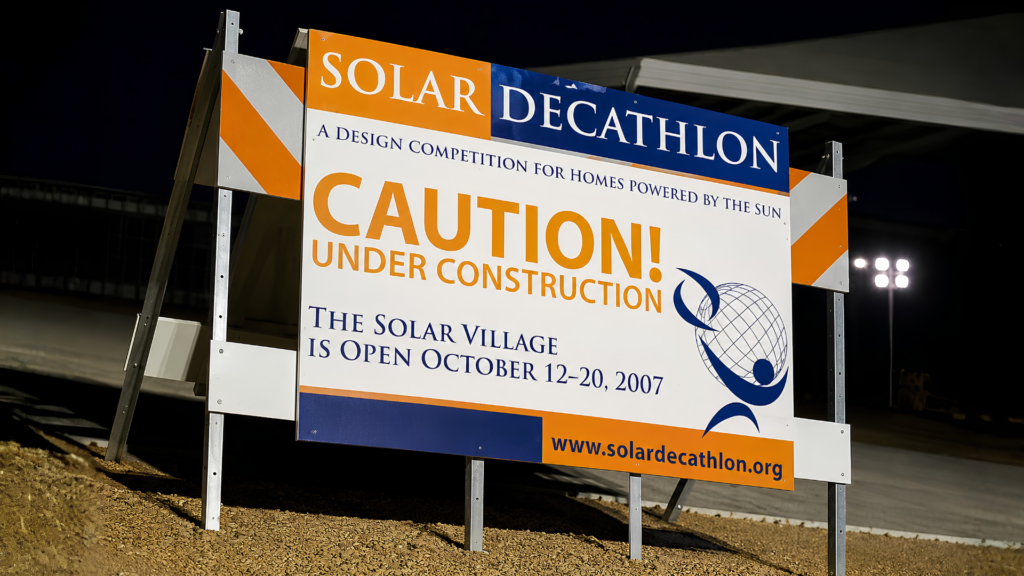
The most common mistake with construction site signage in San Diego is trying to put too much information on one sign. A sign that looks complete on a computer screen may fail in the field if a driver, subcontractor, or pedestrian cannot read it quickly.
Operator Insight from the All Star Signs team: “Make your construction signs clear and concise. Do not make them too busy with information; that will make them hard for anyone to read as they are driving by. The purpose of a construction site sign is to inform people what is going on, who the contractor is, where the entrances and exits are, who to contact in an emergency, and what is required to enter the site.”
That advice should guide the whole sign package. A project rendering, GC logo, owner name, emergency contact, PPE requirements, parking instructions, delivery entrance, and public notice may all be important—but they may not belong on one panel.
Better practice is to separate signage by purpose:
- Public-facing project signs for the owner, contractor, architect, and project name
- Site access signs for entrances, exits, deliveries, and visitor check-in
- Safety signs for PPE, restricted access, hazards, and emergency instructions
- Directional signs for pedestrian detours, parking, loading, and traffic flow
- Compliance and accessibility signs where ADA access, temporary paths, or regulated spaces are involved
For interior or public-access areas connected to a project, contractors may also need coordinated ADA signage once tenant improvements, municipal spaces, schools, medical offices, or multifamily amenities move toward completion.
The right sign type depends on duration, location, and exposure
Construction signs in San Diego need to survive sun, coastal moisture, dust, wind, jobsite handling, and schedule changes. A short-term tenant improvement in Escondido does not need the same materials as a long-term mixed-use project near the coast.
| Sign Type | Common Use | Typical Cost Range | Typical Timeline | Permit Considerations |
| Coroplast safety signs | PPE, warnings, temporary directions | $25–$150 each | 1–3 business days | Usually no permit if temporary and on private site |
| Aluminum composite panels | Main site ID, entrances, parking, durable safety signs | $150–$750+ each | 3–7 business days | May need review depending on size, placement, and visibility |
| Mesh fence banners | Branding, privacy screening, public-facing project info | $300–$2,500+ | 5–10 business days | Placement and wind load should be considered |
| Rigid jobsite project signs | GC/owner/architect sign, rendering panels | $400–$3,500+ | 5–10 business days | Larger signs or public-right-of-way placement may need approval |
| Directional/traffic signs | Deliveries, detours, pedestrian routing | $75–$600+ each | 3–7 business days | Right-of-way or traffic-control use may require coordination |
| Vehicle and fleet graphics | Contractor trucks, trailers, site vehicles | Varies by vehicle scope | 5–14 business days | No sign permit, but design and installation scheduling matter |
Cost depends on size, quantity, material, mounting method, artwork readiness, and installation needs. A basic safety sign order may be inexpensive and fast. A full site package with fence graphics, directional signage, project branding, and installation can run several thousand dollars.
For contractors managing branded trucks and jobsite vehicles, consistent vehicle wraps in San Diego can reinforce the same company identity visitors see on fence signs, trailers, and project panels.
San Diego jobsite signs need a practical sequence
General contractors should not wait until the fence is already up to think about signage. The best time to plan is during preconstruction or before mobilization.
A practical signage sequence looks like this:
- Map the site conditions. Identify public streets, sidewalks, delivery routes, gates, parking, neighboring businesses, schools, and pedestrian paths.
- Define sign categories. Separate safety, directional, access, branding, emergency, and compliance signs.
- Confirm message hierarchy. Decide what must be readable from a moving vehicle versus what can be read at walking distance.
- Choose materials. Match substrate and mounting to project duration, weather exposure, and wind conditions.
- Review placement. Avoid blocked sightlines, unsafe mounting, and signs placed too late to be useful.
- Build in revision time. Entrances, schedules, and logistics often change after site setup.
- Coordinate fabrication and installation. Local production helps when a sign package needs fast adjustment.
This is where a local sign company in Escondido can provide an advantage over online-only sign vendors. Speed matters, but so does knowing how signs perform on real San Diego jobsites. All Star Signs can help contractors plan practical sign packages across all signs, from temporary construction panels to permanent property signage after project completion.
Local expertise helps contractors avoid generic sign packages
National franchises and online sign builders can produce basic panels, but construction site signage often requires more than uploading a file and waiting for a box. Contractors may need help with sizing, readability, material choice, mounting, installation, and quick changes when the superintendent moves an entrance or the owner requests updated branding.
All Star Signs brings custom craftsmanship, local production knowledge, and broad sign experience to jobsite work throughout San Diego County. Based in Escondido, the team supports projects across North County communities such as Escondido, Vista, San Marcos, Carlsbad, Oceanside, and surrounding Metro San Diego markets.
For GCs, the best signage partner is not just the cheapest printer. It is the team that can help prevent unclear messaging, poor materials, unreadable layouts, and late-stage scrambling.
Need construction site signage in San Diego before mobilization? Contact All Star Signs to plan a clear, durable jobsite sign package for entrances, exits, safety notices, emergency contacts, fence graphics, and contractor identification.
Construction site signage decisions affect safety and public perception
A construction site is judged before anyone walks inside. Neighbors, owners, inspectors, subcontractors, and prospective clients all see the signs first. Clean, professional, easy-to-read signage signals that the project is organized. Confusing, faded, crowded, or missing signage signals the opposite.
For general contractors, early signage planning supports:
- Safer worker and visitor movement
- Better delivery routing
- Stronger public communication
- Cleaner project branding
- Reduced confusion at gates and access points
- Faster response in emergencies
- More professional owner and community impressions
The rule is simple: if someone must make a decision at the site, a sign should help them make the right one quickly.
Frequently Asked Questions
How early should a general contractor order construction site signage in San Diego?
General contractors should start planning signage before mobilization and order essential signs at least one to two weeks before the site opens when possible. Basic safety and directional signs can often be produced faster, but larger project signs, fence banners, custom graphics, and installed signage need more lead time.
Do construction site signs in San Diego require permits?
Many temporary signs placed on private construction sites do not require the same process as permanent building signs, but requirements can vary by size, location, duration, and whether the sign affects public right-of-way, traffic control, or visibility. Contractors should verify site-specific requirements early, especially for large public-facing signs.
What information should be included on a construction site sign?
A construction site sign should include only the information needed for its purpose. Common details include project name, contractor name, emergency contact, entrance and exit directions, delivery instructions, PPE requirements, restricted access warnings, and visitor check-in instructions. Avoid crowding all details onto one sign.
What materials work best for San Diego construction signage?
Coroplast is common for short-term safety signs, while aluminum composite panels are better for durable outdoor use. Mesh banners work well on fencing because they allow airflow, and rigid panels are often used for main project identification. Material choice should reflect project duration, exposure, mounting surface, and visibility needs.
Can All Star Signs help with both temporary construction signs and permanent signs after the project?
Yes. All Star Signs can support temporary construction site signage as well as permanent signage for completed properties, including building signs, directional signs, ADA signage, window graphics, vehicle graphics, and other custom sign needs throughout San Diego County.