Apartment complexes in San Diego County typically need leasing signs, monument or entry signs, building address numbers, parking signs, directional signs, amenity signs, and ADA signage. The best systems are consistent across the property, easy to read from vehicles and walkways, durable for coastal or inland conditions, and designed around tenant, guest, vendor, and emergency-access needs.
Apartment complex signage works best as a complete property system
Signs for apartment complexes in San Diego County should not be ordered one piece at a time without a plan. A leasing banner, pool rules sign, building number, parking notice, and ADA room sign may all serve different purposes, but residents experience them as one property communication system.
A strong apartment signage plan usually includes:
- Primary identification — monument signs, entry signs, wall signs, and property name signs.
- Leasing visibility — banners, flags, temporary signs, window graphics, and leasing office signs.
- Wayfinding — directional signs for buildings, parking, leasing office, mailboxes, amenities, trash areas, and exits.
- Building identification — consistent building address numbers, unit ranges, stairwell signs, and exterior markers.
- Compliance and safety — ADA signage, parking signs, fire lane signs, pool rules, evacuation maps, and notices.
- Resident experience — amenity signs, community rules, package room signs, dog area signs, and branded interior signs.
All Star Signs has served the San Diego County market from Escondido since 1997/1998, supporting property managers, schools, municipalities, contractors, and institutional clients with custom sign fabrication and installation. That local experience matters because apartment properties are not static storefronts. They have resident turnover, vendor traffic, deliveries, emergency access concerns, leasing goals, and long-term maintenance needs.
Leasing signs must attract prospects without cheapening the property
Leasing signage has one job: make it easy for the right prospect to notice the property, understand availability, and know what to do next. In competitive rental markets across Escondido, San Marcos, Vista, Oceanside, Carlsbad, Poway, and greater San Diego County, a faded “Now Leasing” banner tied to a fence is rarely enough.
Effective leasing signs often include:
- Large “Now Leasing” or “Tour Today” messaging
- Phone number, website, or QR code
- Directional arrows to the leasing office
- Branded colors that match the property identity
- Durable outdoor materials for multi-month campaigns
- Clean installation that avoids a cluttered or temporary-looking entrance
For many apartment communities, leasing signs can be produced quickly when the design is simple and approvals are ready. More permanent entry signs, illuminated signage, or monument upgrades require a longer timeline because fabrication, site conditions, landlord approvals, and city requirements may apply.
Need a property signage refresh? Start by reviewing your entry signs, building numbers, leasing office signs, directional signs, and compliance signs together. All Star Signs can help property managers coordinate custom all signs for apartment communities across San Diego County so the finished system looks consistent instead of patched together.
Directional signs and building numbers solve the problems residents complain about
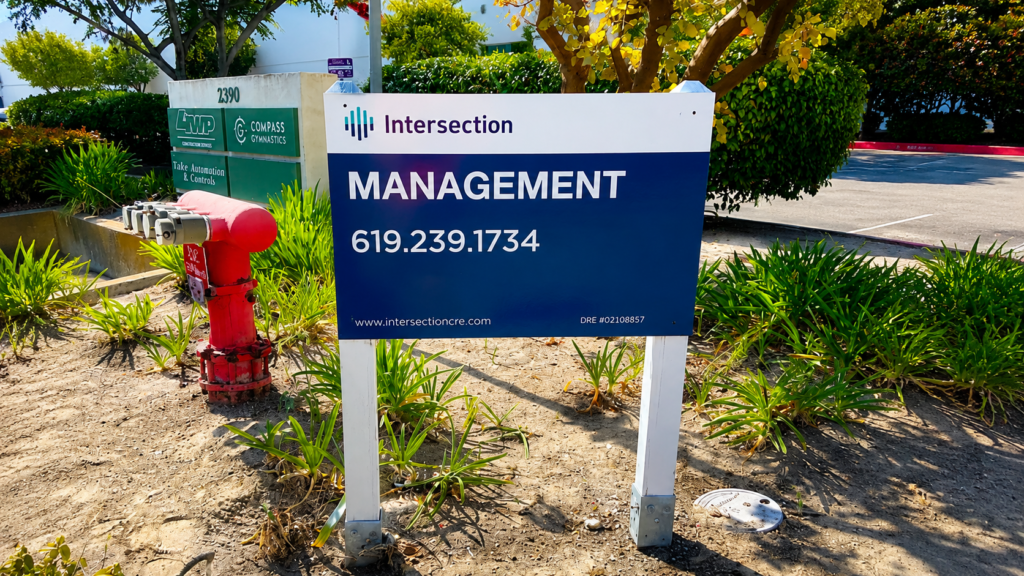
Many apartment signage issues are not branding problems. They are navigation problems. If a delivery driver cannot find Building 8, a guest circles the wrong parking lot, or a new tenant misses the leasing office entrance, the property feels disorganized before anyone reaches the front door.
All Star Signs team insight:
Customers often overlook the importance of clear and consistent directional signage throughout a property. Properly placed signs help tenants, visitors, and guests navigate quickly. Building address numbers are equally important, especially on properties with multiple buildings, because consistent numbering helps people identify the correct building and creates a more organized property experience.
For San Diego County apartment communities with multiple buildings, split driveways, parking structures, hillside layouts, or interior courtyards, directional signs should be placed where decisions happen. That includes entrances, forks in the road, parking lot transitions, walkway intersections, elevator lobbies, and leasing office approaches.
Practical examples include:
- “Leasing Office” signs at the main driveway and guest parking area
- Building range signs such as “Buildings 1–4” and “Buildings 5–9”
- Clearly visible exterior address numbers on each building
- Amenity directional signs for pool, gym, clubhouse, mailroom, and package lockers
- Parking signs separating resident, visitor, future resident, accessible, and reserved spaces
Good wayfinding reduces calls to the office, improves the move-in experience, and supports emergency responders who need to identify the correct building quickly.
Material choices should match San Diego County exposure and daily wear
Apartment signs take abuse. They sit in direct sun, get hit by irrigation overspray, face coastal moisture, collect dust in inland areas, and deal with constant resident and vendor interaction. The right material depends on sign location, expected lifespan, budget, and whether the sign is temporary or permanent.
Common options include aluminum panels, acrylic signs, dimensional letters, vinyl graphics, post-and-panel signs, illuminated cabinets, routed monument faces, reflective parking signs, and interior ADA plaques. For properties that want a cleaner branded appearance, custom color matching and consistent typography help every sign feel intentional.
All Star Signs also uses modern production capabilities, including HP Latex printing, which supports high-quality graphics for many outdoor and indoor applications. For property managers, that can mean sharper leasing graphics, cleaner amenity signs, and durable branded visuals without defaulting to generic franchise-style templates.
Apartment sign costs and timelines depend on type, size, and approvals
The table below gives practical planning ranges. Actual pricing varies based on size, material, quantity, installation conditions, artwork readiness, access, and permit requirements.
| Sign Type | Typical Use | Estimated Cost Range | Typical Timeline | Permit Usually Required? |
| Leasing banners | “Now Leasing,” specials, temporary promotions | $150–$750+ | 2–7 business days | Usually no, but placement rules may apply |
| Directional signs | Leasing office, buildings, amenities, exits | $125–$600+ each | 5–15 business days | Usually no for small non-illuminated signs |
| Building address numbers | Multi-building identification and emergency access | $75–$500+ per location | 5–15 business days | Sometimes, depending on size/location |
| Parking and traffic signs | Reserved, visitor, accessible, fire lane, tow notices | $75–$350+ each | 3–10 business days | Sometimes, especially regulated signs |
| ADA room and amenity signs | Restrooms, leasing office, clubhouse, accessible areas | $45–$250+ each | 5–15 business days | Typically compliance-driven, not always permit-based |
| Monument or entry signs | Main property identity at street or driveway | $2,500–$15,000+ | 3–8+ weeks | Often yes |
| Illuminated signs | Night visibility for entry or leasing office | $3,500–$20,000+ | 4–10+ weeks | Often yes |
For larger projects, the smartest approach is a sign survey before production. A survey identifies missing signs, inconsistent signs, damaged signs, poor sightlines, mounting issues, and places where a new sign may need approval.
Property managers should follow a simple signage planning process
A well-run apartment sign project does not need to be complicated. It does need sequencing.
- Walk the property from a visitor’s perspective. Start at the street and follow the path to guest parking, leasing office, buildings, amenities, mail, trash, and exits.
- Document every missing, damaged, confusing, or inconsistent sign. Photos and notes help prevent duplicate site visits.
- Separate temporary needs from permanent improvements. Leasing banners and directional inserts move faster than monuments or illuminated signs.
- Confirm brand standards. Match fonts, colors, logos, and materials where possible.
- Review compliance needs. Include ADA signage, parking signs, pool rules, fire access, and local posting requirements.
- Plan installation access. Consider landscaping, irrigation, wall surfaces, underground utilities, parking disruption, and resident safety.
- Produce in phases if needed. Many properties start with leasing and wayfinding, then upgrade entry and monument signs.
This process helps property managers avoid mismatched signs, rushed reorders, and signage that solves one problem while creating another.
Local expertise gives apartment communities an advantage over generic sign ordering
Online sign sellers and national franchises can be useful for simple one-off products, but apartment properties often need more than a file upload. They need signs that fit the site, communicate clearly, survive local conditions, and support leasing, safety, and resident experience at the same time.
A local San Diego sign company can help evaluate visibility, mounting surfaces, quantity, sign hierarchy, and installation conditions before production. That is especially important for older properties, properties undergoing renovations, and communities trying to improve curb appeal without replacing every sign at once.
For properties in North County and throughout Metro San Diego County, All Star Signs brings custom craftsmanship, local installation knowledge, broad sign production capabilities, and experience with property management signage. From entry signs to ADA plaques, the goal is not simply to print signs. It is to make the property easier to find, easier to navigate, and easier to manage.
Frequently asked questions about apartment complex signs in San Diego County
What signs does an apartment complex need in San Diego County?
Most apartment complexes need property identification signs, leasing signs, building address numbers, directional signs, parking signs, amenity signs, safety notices, and ADA signage. Larger communities may also need monument signs, illuminated signs, unit range signs, mailroom signs, package room signs, pool rules, and evacuation maps.
Do apartment signs in San Diego County require permits?
Some signs do and some do not. Temporary banners, small directional signs, interior signs, and ADA room signs may not require a standard sign permit, but permanent exterior signs, illuminated signs, monument signs, and large wall signs often require review. Requirements vary by city, property type, zoning, and installation method.
How long does it take to make signs for an apartment complex?
Simple leasing banners or replacement parking signs may be completed in a few business days once artwork is approved. Directional sign packages often take one to three weeks. Monument signs, illuminated signs, and larger exterior systems can take several weeks because they may involve design, fabrication, site review, installation planning, and permitting.
What is the most overlooked sign type for apartment communities?
Building address numbers and directional signs are often overlooked. They may not feel as exciting as a new monument sign, but they directly affect visitors, delivery drivers, vendors, emergency responders, and prospective tenants. Clear, consistent numbering makes multi-building properties easier to navigate and more professional.
Can apartment signage be updated in phases?
Yes. Many San Diego County apartment communities phase signage by starting with urgent items such as leasing signs, building numbers, parking signs, and ADA signage. Entry signs, monument signs, amenity signs, and full wayfinding upgrades can follow as budget and approvals allow. This approach improves the property without requiring every sign to be replaced at once.
Next Step for All Star Signs
Request a consultation
Contact Us