ADA signs in San Diego must meet federal accessibility rules for tactile text, Braille, contrast, finish, mounting height, and placement. The best ADA signage also improves visitor flow, supports your brand, and helps schools, offices, apartments, medical facilities, and public buildings create a safer, easier-to-navigate experience.
Key Takeaways
- ADA signs are not compliant just because they include Braille and Tactile; mounting location, character style, contrast, and finish all matter.
- Most interior ADA signage does not require a sign permit, but exterior directional, monument, wall, and illuminated signs may need review.
- Typical ADA room ID signs often range from about $35–$150+ per sign, while full wayfinding packages can range from hundreds to several thousand dollars depending on scope.
- Working with a local San Diego sign company helps avoid costly replacement, reinstallation, and inconsistent building signage.
ADA signage works best when compliance and wayfinding are planned together
ADA signage is required in many public-facing and employee-accessible spaces, but the real value is bigger than code compliance. A strong ADA and wayfinding sign system helps people understand where they are, where they need to go, and how to move through a building without confusion.
For San Diego property managers, schools, medical offices, churches, retail centers, municipalities, and commercial buildings, this matters every day. Visitors should not have to ask three people where the restroom, elevator, suite, office, exit route, or accessible entrance is located. Clear signage reduces friction, protects accessibility, and makes the building feel professionally managed.
All Star Signs designs and produces ADA signage for businesses and organizations throughout Metro San Diego County from its Escondido base. That local experience matters because many projects are not just “make a few signs.” They involve existing architecture, tenant improvements, city facilities, school campuses, property management standards, and installation conditions that affect the final result.
Need ADA signs for a San Diego building, campus, or property? Start with All Star Signs’ ADA signage service page to request custom room IDs, restroom signs, directional signs, evacuation maps, and coordinated interior wayfinding.
ADA signs in San Diego must meet specific design and installation standards
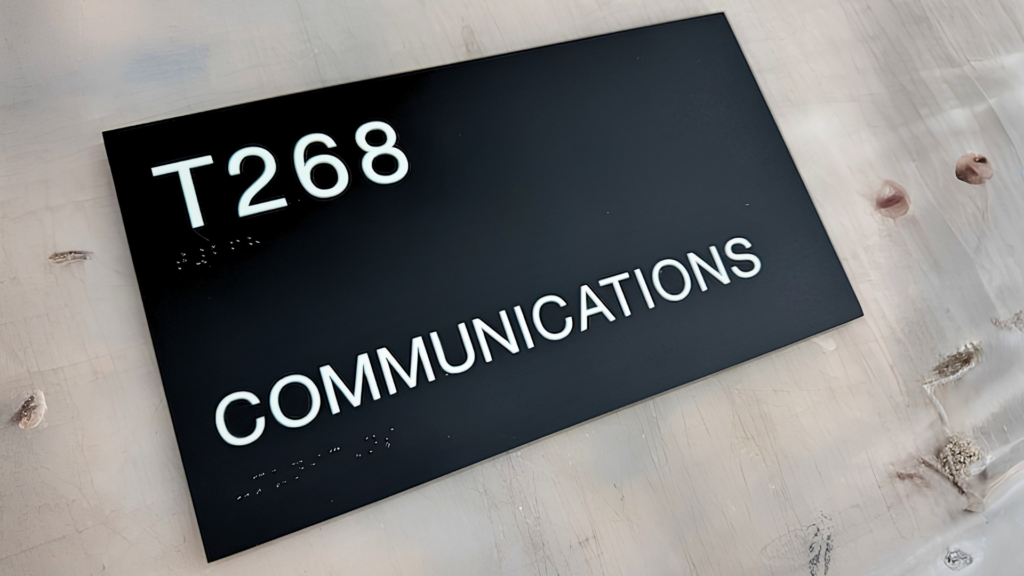
The most common mistake is assuming ADA signs are compliant because they “look official” or include Braille. In reality, ADA compliance depends on several details working together.
A compliant ADA sign may need:
- Non-glare finish so the sign remains readable under interior lighting.
- High contrast between tactile characters and the background.
- Raised tactile characters that meet size, spacing, and style requirements.
- Proper Braille placement directly below the matching tactile text.
- Approved sans serif uppercase lettering for tactile characters.
- Correct mounting height and location at doors, rooms, restrooms, and permanent spaces.
- Consistent placement so visitors can predict where to find information.
Operator Insight from the All Star Signs Team: Many customers are unfamiliar with the ADA requirements that govern both the design and installation of ADA-compliant signage. The sign face must have a non-glare finish, sufficient contrast, correctly positioned Braille, approved uppercase sans serif tactile characters, and proper mounting height and location. If those details are missed, the sign may need to be replaced or reinstalled.
That last point is where costs can climb. A sign that is beautifully fabricated but mounted in the wrong location may still fail compliance. A sign with Braille and that is too low, too high, too far from the related text, or inconsistent with Tactile copy can create a problem during inspection or occupancy review.
The right ADA sign package depends on your building type and visitor flow
ADA signs are usually part of a larger communication system. A medical office needs patient confidence and clear suite identification. A school needs durable classroom, restroom, office, and campus wayfinding signs. A multi-tenant property needs consistent suite IDs, directories, exit signs, and accessible route markers. A city or public agency may need signs that are easy to maintain, replace, and match over time.
Common ADA and wayfinding signs include:
- Room identification signs
- Restroom signs
- Exit route and stair signs
- Elevator and floor level signs
- Suite and office signs
- Accessible entrance signs
- Directional signs
- Directories and tenant panels
- Parking and accessible route signs
- Campus, school, and facility wayfinding systems
All Star Signs’ broader experience with [all signs], schools, property management, municipalities, and third-party installation gives clients a practical advantage: the ADA package can be planned alongside lobby signs, directories, exterior signs, parking signs, window graphics, and other branded signage instead of becoming an isolated compliance purchase.
ADA and wayfinding sign costs vary by material, quantity, and complexity
Most ADA signs in San Diego are priced based on size, substrate, tactile requirements, Braille, finish, customization, installation, and the total number of signs. Simple room ID signs are usually far less expensive than a full facility wayfinding program with directories, custom colors, branded design, and field installation.
| Sign Type | Typical Use | Estimated Cost Range | Typical Timeline | Permit Requirement |
| ADA room ID signs | Offices, classrooms, restrooms, permanent rooms | $35–$150+ per sign | 1–3 weeks after approval | Usually no permit for interior signs |
| Custom branded ADA signs | Hotels, medical offices, corporate interiors, campuses | $75–$250+ per sign | 2–4 weeks after approval | Usually no permit for interior signs |
| Interior wayfinding signs | Directories, arrows, floor guides, suite navigation | $150–$1,500+ depending on scope | 2–5 weeks | Usually no permit unless structural/electrical conditions apply |
| Exterior accessible route signs | Parking areas, entrances, pathways | $100–$500+ per sign | 2–4 weeks | May require review depending on location and mounting |
| Full ADA and wayfinding package | Schools, apartments, public buildings, multi-tenant properties | $1,500–$10,000+ | 3–8+ weeks depending on survey and installation | Interior often no; exterior signs may require permits |
These ranges are planning estimates, not fixed quotes. A small tenant improvement may only need a handful of room signs. A school, apartment community, municipal building, or medical campus may need a surveyed sign schedule, fabrication drawings, material matching, phased installation, and replacement planning.
Local San Diego experience reduces compliance mistakes and project delays
ADA signs may be governed by federal standards, but every local project has practical realities. Older buildings in Escondido, Oceanside, Carlsbad, San Marcos, Vista, Poway, Chula Vista, El Cajon, and central San Diego often have existing sign programs, unusual wall conditions, remodel constraints, or tenant standards that affect installation.
A local sign company can help answer questions before fabrication begins:
- Where does each required sign need to be installed?
- Which signs are permanent room IDs versus directional aids?
- Does the sign need tactile text and Braille, or only visual information?
- Will the finish work under the building’s lighting?
- Should ADA signs match existing brand colors without sacrificing contrast?
- Are exterior signs part of the same project and subject to separate review?
- Can future replacement signs be matched later?
For example, a property manager updating a multi-tenant office building may need new suite signs, restroom signs, lobby directory panels, and accessible route signage. If each item is ordered separately from different vendors, the building can end up with inconsistent materials, mismatched colors, and uneven compliance. A coordinated sign package keeps the property easier to navigate and more professional.
Branded ADA signs can be compliant without looking generic
Compliance does not mean plain, institutional, or off-brand. ADA signs can use carefully selected colors, materials, shapes, finishes, and design systems while still meeting accessibility requirements. The balance is knowing where customization is appropriate and where compliance rules must lead.
Good ADA signage should:
- Match the visual tone of the building or organization
- Use durable materials that fit daily traffic levels
- Maintain required contrast and readability
- Keep tactile and Braille elements accurate
- Support a consistent wayfinding pattern
- Be easy to replace or expand as rooms change
This is especially important for schools, healthcare offices, churches, city facilities, apartments, and professional offices where signage is part of the visitor experience. All Star Signs has served San Diego County businesses since 1997/1998 and works across a broad catalog of sign types, from interior ADA systems to marquees for schools, vehicle graphics, exterior signs, and property signage. That range helps clients build a connected sign system instead of a patchwork of one-off signs.
A practical ADA sign project follows a clear sequence
The most efficient projects follow a simple process:
- Identify required locations
Review rooms, restrooms, exits, elevators, accessible routes, offices, and public areas.
- Confirm sign types
Separate tactile ADA signs from directional signs, directories, parking signs, and branded graphics.
- Choose materials and design direction
Select colors, finishes, substrates, and layouts that support both compliance and brand experience.
- Approve copy and sign schedule
Confirm room names, suite numbers, Braille/tactile requirements, quantities, and installation locations.
- Fabricate signs accurately
Produce signs with the correct finish, contrast, tactile characters, Braille, and mounting readiness.
- Install at proper height and location
Place each sign where users expect it and where accessibility standards require it.
- Plan for future updates
Keep layouts and materials consistent so new signs can be added later without restarting the system.
FAQ: ADA signs in San Diego
Do ADA signs in San Diego need Braille?
Many permanent room identification signs, restroom signs, elevator signs, and certain interior signs require tactile characters and Braille. Not every directional or informational sign requires Braille, which is why it is important to confirm the sign’s purpose before ordering.
How much do ADA signs cost in San Diego?
Basic ADA room signs often range from about $35 to $150+ per sign, while custom branded ADA signs may cost more depending on materials, colors, tactile elements, quantity, and installation. A full ADA and wayfinding package for a school, office building, apartment community, or public facility can range from several hundred dollars to $10,000+.
Do interior ADA signs require a permit in San Diego?
Most interior ADA signs do not require a sign permit. However, exterior signs, illuminated signs, freestanding signs, monument signs, wall signs, and certain parking or directional signs may require review depending on the city, property type, and installation method.
What makes an ADA sign non-compliant?
An ADA sign may be non-compliant if it has poor contrast, glare, incorrect Braille spacing or placement, unapproved tactile font style, missing tactile characters, incorrect character height, or improper mounting height and location. Installation mistakes can make an otherwise well-made sign fail accessibility requirements.
Who should order ADA signs for a San Diego property?
Property managers, general contractors, school administrators, business owners, facility managers, architects, and tenant improvement teams often order ADA signs. The best time to plan them is before final inspections, renovations, tenant move-ins, or public opening dates so design, fabrication, and installation can be coordinated properly.