In most cases, yes. Businesses in San Diego County typically need sign permits before installing exterior building signs, monument signs, illuminated signs, wall signs, and many tenant-panel updates. Permit rules vary by city, property type, sign size, illumination, zoning, and landlord requirements, so approval should be confirmed before fabrication or installation begins.
Key Takeaways
- Most exterior commercial signs in San Diego require city approval before installation.
- Permit timelines commonly range from a few weeks to longer, depending on municipality, property approvals, and plan corrections.
- Shopping centers, business parks, and multi-tenant properties often have sign criteria in addition to city code.
- Working with a local sign company helps prevent redesigns, failed inspections, and costly delays.
Sign permits protect more than city code compliance
A sign permit is not just a bureaucratic step. It is the approval process that helps confirm your sign is legal, safe, appropriately sized, properly placed, and consistent with the property’s design standards.
In San Diego County, businesses may need approval from more than one party before an exterior sign can go up:
- The city or municipality
- The property owner or landlord
- The property manager
- The shopping center or business park association
- In some cases, an electrical or building department reviewer
This matters because every city handles signs differently. A sign that works in Escondido may not meet the same requirements in San Diego, Oceanside, Carlsbad, San Marcos, Vista, Poway, or Chula Vista. Even within the same city, rules can change based on zoning, frontage, building elevation, illumination, and whether the property is part of a planned commercial center.
All Star Signs works from Escondido and serves businesses throughout Metro San Diego County, so the team regularly navigates local sign code, landlord criteria, fabrication requirements, and installation conditions across multiple municipalities.
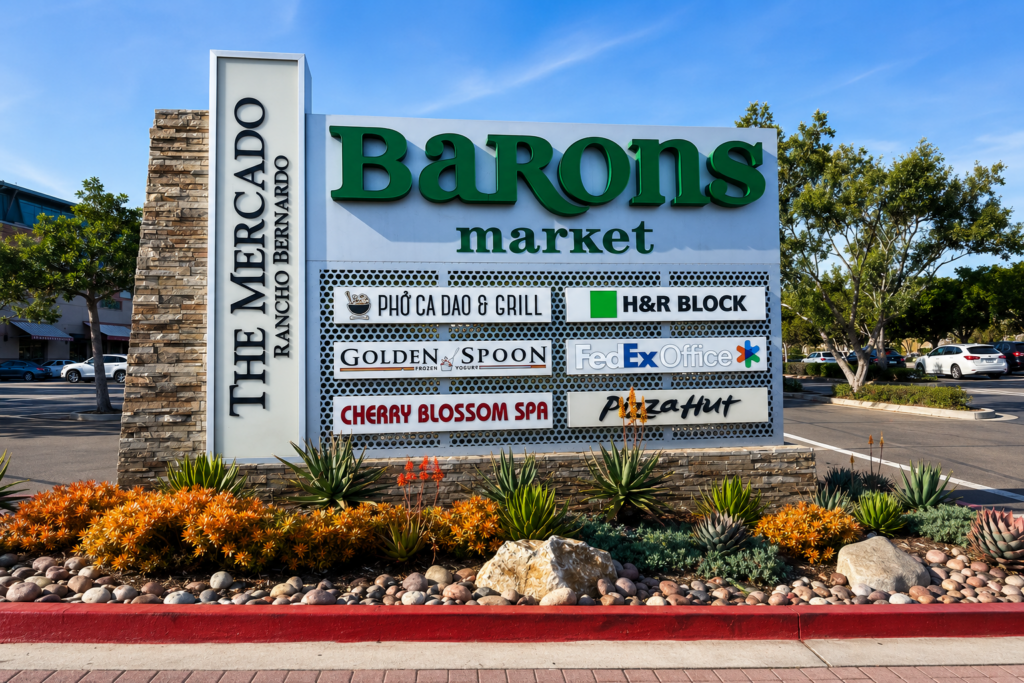
Permit requirements depend on sign type, location, and property rules
Most permanent exterior business signs require review before installation. This often includes channel letters, illuminated cabinet signs, monument signs, wall signs, tenant panels, projecting signs, and many exterior directional signs.
Temporary banners, window graphics, and certain non-illuminated displays may have different rules, but “temporary” does not always mean “no permit.” Some cities limit banner duration, size, placement, or frequency.
Here is a practical comparison business owners can use when planning a San Diego sign project:
| Sign Type | Typical Cost Range | Typical Timeline | Permit Requirement |
| Wall sign or flat-cut letters | $1,500–$7,500+ | 3–8 weeks | Often required for exterior placement |
| Channel letters | $4,000–$15,000+ | 4–10 weeks | Usually required, especially if illuminated |
| Monument sign | $8,000–$30,000+ | 6–12+ weeks | Usually required; may involve site plans |
| Tenant panel replacement | $500–$3,500+ | 2–6 weeks | Sometimes required, depending on city and center rules |
| Illuminated cabinet sign | $5,000–$20,000+ | 4–10 weeks | Usually required; electrical review may apply |
| Window graphics | $500–$5,000+ | 1–4 weeks | Varies by coverage, placement, and city |
| ADA signage | $250–$2,500+ | 1–4 weeks | Interior code compliance required; exterior permits vary |
Costs and timelines depend on size, materials, access, engineering needs, electrical work, city workload, and whether revisions are requested. A qualified sign company should help identify these variables early rather than after the sign has already been designed.
A local sign company can prevent expensive redesigns
Before choosing a sign design, a business owner should confirm what is actually allowed at the location. The best-looking design is not useful if the city, landlord, or property manager will reject it.
All Star Signs helps businesses evaluate practical questions such as:
- How large can the sign be based on the building frontage?
- Are illuminated signs allowed at this property?
- Does the shopping center require a specific color, letter style, or mounting method?
- Will the sign need engineering, electrical work, or special access equipment?
- Are there visibility restrictions from neighboring tenants, roads, or landscaping?
- Does the sign need to coordinate with other exterior signs on the property?
If your business needs a new exterior sign, tenant sign, or code-conscious storefront update, start with a local review before fabrication. All Star Signs can help you plan, design, permit, fabricate, and install [all signs] with the right materials and local requirements in mind. Businesses in North County can also connect with a trusted sign company in Escondido for local support.
Property managers care about consistency across the whole site
For multi-tenant centers, sign permits are about more than one business. A property owner or manager has to protect the appearance of the entire building, shopping center, or business park.
Operator Insight from the All Star Signs Team:
“Sign permits are put in place to keep continuity in a shopping center, business park, or common area. Most customers do not understand that although timely and expensive, the sign permit is important in every municipality. It benefits the city, the property manager, and the property owner by maintaining consistency with the building’s architectural integrity and overall appearance.”
That insight is especially important in San Diego commercial properties where multiple tenants share the same building elevation. Without permitting and sign criteria, one center can quickly become a mismatched collection of colors, sizes, lighting styles, and installation methods.
For property managers, schools, municipalities, and institutional facilities, consistency is often part of the brand experience. That is why All Star Signs also supports compliant interior systems such as [ADA signage](https://allstarsignsinc.com/ada-signage), campus signage, and [marquees for schools](https://allstarsignsinc.com/marquees-for-schools), where readability, durability, and code awareness matter.
The permitting process should begin before fabrication
A common mistake is treating the permit as the final step. In reality, permitting should influence the sign design from the beginning.
A typical San Diego sign permit process may include:
- Site review
The sign company reviews the building, tenant space, landlord criteria, existing signage, visibility, mounting conditions, and code-sensitive issues.
- Design and specifications
Drawings are prepared with dimensions, materials, colors, lighting details, mounting methods, and placement.
- Landlord or property manager approval
Many commercial properties require written approval before a city will issue or review a permit.
- City submittal
Permit documents are submitted to the correct municipality with required forms, drawings, fees, and supporting details.
- Plan review and corrections
The city may approve the permit or request revisions. Corrections can affect size, placement, electrical details, or construction specifications.
- Fabrication and installation
Once approvals are in place, the sign can be fabricated and installed according to the approved plan.
- Inspection when required
Some signs, especially illuminated or structurally significant signs, may require inspection after installation.
The smartest approach is simple: confirm the rules before investing in fabrication. That protects the budget, timeline, and final result.
Quality materials and proper installation matter after approval
A permit does not guarantee a sign will perform well. It only confirms that the approved design meets the reviewing authority’s requirements. Long-term value still depends on craftsmanship, material selection, fabrication quality, and installation skill.
San Diego businesses should consider:
- UV exposure and coastal weather
- Wind load and mounting conditions
- Electrical reliability for illuminated signs
- Paint, vinyl, acrylic, aluminum, and cabinet durability
- Service access for future maintenance
- Brand consistency across multiple locations or vehicles
All Star Signs brings decades of local sign experience, broad fabrication capabilities, and practical installation knowledge to commercial projects across San Diego County. That local expertise is especially valuable when a project involves a landlord, a city reviewer, and a tight opening date.
San Diego businesses should budget for both approval time and production time
Permit fees and timelines vary by jurisdiction and project type. Business owners should not assume a sign can be installed immediately after a design is approved internally.
As a general planning range:
- Simple non-illuminated updates may take a few weeks.
- Illuminated exterior signs often take several weeks or longer.
- Monument signs, engineered signs, or multi-party approvals can take two to three months or more.
- Corrections, landlord delays, or incomplete drawings can extend the schedule.
The best way to move faster is to submit a complete, accurate package the first time. That is where an experienced local sign team can make the difference between steady progress and avoidable back-and-forth.
Frequently Asked Questions About Sign Permits in San Diego
Do I need a permit for a business sign in San Diego?
Most permanent exterior business signs in San Diego require a permit or city approval before installation. This commonly includes wall signs, channel letters, illuminated signs, monument signs, and many tenant sign updates. Requirements vary by city, zoning, building frontage, property rules, and sign type.
How long does it take to get a sign permit in San Diego County?
Many sign permits take several weeks, but the timeline depends on the municipality, project complexity, landlord approval, plan review workload, and whether corrections are requested. Simple projects may move faster, while illuminated signs, monument signs, or engineered installations can take longer.
Can I install my sign first and get the permit later?
That is risky and usually not recommended. Installing without approval can lead to fines, removal orders, redesign costs, landlord disputes, or failed inspections. Businesses should confirm city and property requirements before fabrication and installation.
Who handles the sign permit, the business owner or the sign company?
It depends on the project and provider. Many full-service sign companies help prepare drawings, specifications, and permit submittals. Business owners may still need to provide lease information, landlord approval, business details, or authorization forms.
Are sign permit rules the same in Escondido, San Diego, Oceanside, and Carlsbad?
No. Each municipality can have different sign codes, review processes, fees, zoning rules, and documentation requirements. A local sign company familiar with San Diego County can help identify the correct requirements for the specific property before production begins.
Contact Us